Silicone RTV 4500 Flexibility Properties

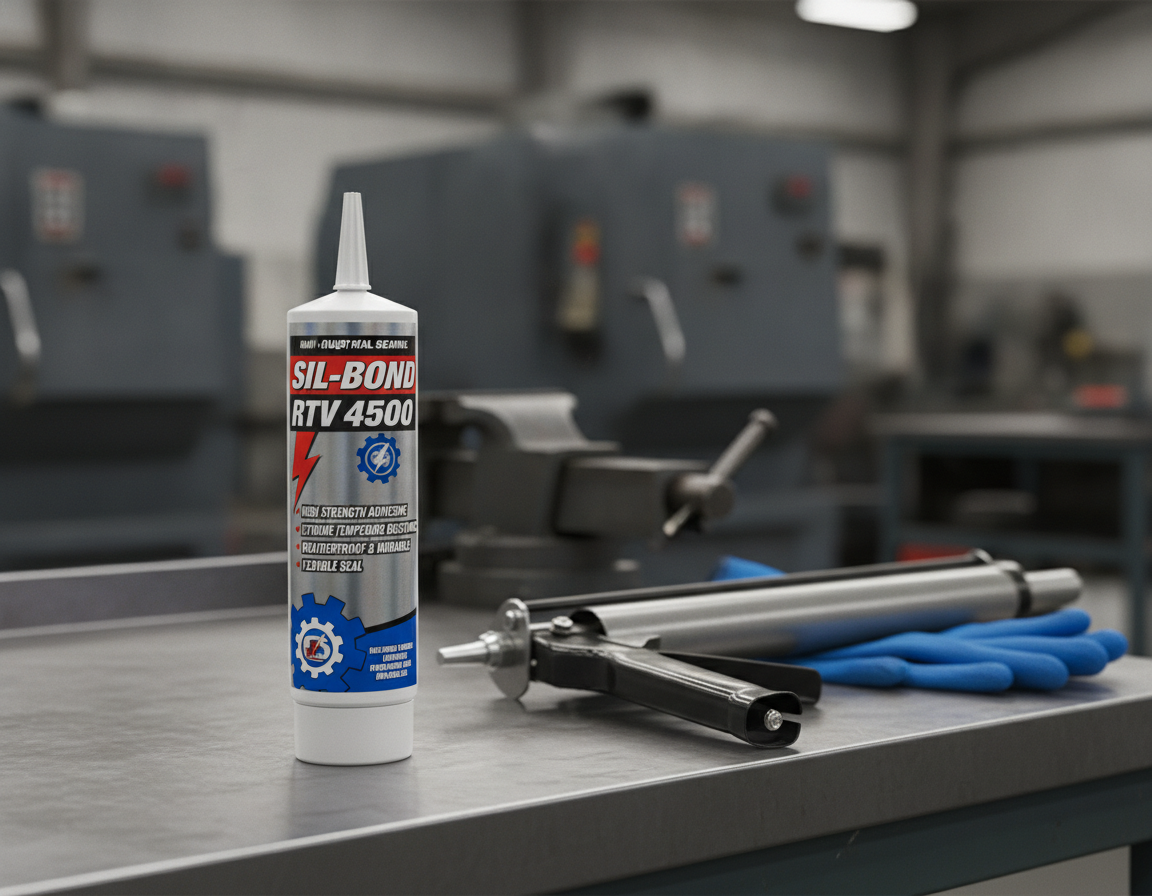
RTV 4500 Silicone is a single-component acetoxy-cure RTV sealant that vulcanizes at room temperature and is formulated for commercial sealing work. It creates high-strength, waterproof, and airtight bonds, ideal for roofing, marine, and HVAC applications. This makes it a popular option for those needing reliable sealing solutions.

Its UV stability and non-yellowing properties support it maintains appearance and function outdoors. Because RTV 4500 meets many green-building and regulatory requirements, it is often selected by contractors, maintenance teams, and facilities managers.

Across the United States, RTV 4500 may appear under several names, such as Sil-Bond RTV 4500, Silco RTV 4500, Sil Bond, and RTV4500. Installation Parts Supply (https://installationpartssupply.com) stocks a range of industrial-grade sealants and plumbing supplies. They support contractors, plumbers, HVAC technicians, and more across the U.S.

RTV 4500 Silicone is especially practical for contractors, plumbers, HVAC technicians, marine technicians, precast concrete fabricators, roofing crews, appliance manufacturers, and facilities maintenance teams. This article will cover its durability, adhesion strength, regulatory approvals, and compatibility with various substrates.
Silco RTV 4500

  • RTV 4500 Silicone is an acetoxy-cure, one-component sealant for industrial use.
  • It provides waterproof, airtight bonds with UV stability and non-yellowing properties.
  • In the U.S., common trade names include Sil-Bond RTV 4500.
  • Installation Parts Supply is a U.S. source for industrial-grade RTV4500 and related products.
  • Typical users include plumbers.

RTV 4500 Silicone And Sil-Bond RTV 4500 Overview

Sil-Bond RTV 4500 is a one-component acetoxy-cure silicone made for demanding industrial sealing and bonding. It is marketed under several names, including Sil-Bond RTV 4500, Sil Bond, and references to Silbond Corp or Silco RTV 4500. This product is listed alongside similar RTV formulas in distributor catalogs. It is often found in Senta 100% RTV Silicone and other RTV 4500 variants, available in multiple SKUs and packaging formats.

Its acetoxy-cure chemistry causes the compound to cure at room temperature while releasing acetic acid. This process delivers fast tack and strong initial adhesion but requires caution on acid-sensitive substrates. Many U.S. vendors and specialty distributors, including Installation Parts Supply and similar online suppliers, carry this High Strength Silicone Sealant for trade, commercial, and industrial buyers.

Important specifications list the product under ASTM C920 Type S, Grade NS, Class 25, along with federal and military standards such as TT-S-00230C, TT-S-01543A, and MIL-A-46106A. It also offers regulatory credentials such as FDA CFR 177.2600 compliance, USDA acceptance, NSF 51 recognition as an NSF Approved Silicone Sealant for indirect food contact, and UL Recognized Component status. The formulation is VOC-compliant to meet green building and low-emission project requirements.

Each approval connects to a practical use case. ASTM C920 defines elastomeric sealant performance and classification for joint movement. NSF 51 supports food-equipment situations where indirect contact may occur. MIL-A-46106A and TT-S standards demonstrate suitability for federal and military installations that require strict material performance.

Category Specification / Approval Practical Impact
Movement capability ASTM C920, Type S, Grade NS, Class 25 Handles movement in joints where expansion and contraction occur
Federal and military use MIL-A-46106A, TT-S-00230C, TT-S-01543A Supports strict durability requirements for defense and federal work
Food contact FDA CFR 177.2600 compliance, USDA acceptance, and NSF 51 Useful where food-adjacent sealing requirements apply
Exposure and life UV Stable RTV 4500 and Non-Shrinking Silicone behavior Resists yellowing and shrinkage for extended exterior service life
Low-emission performance VOC-compliant formulation Supports LEED-style and low-emission project requirements
Sealant type RTV 4500 Silicone or Sil-Bond RTV 4500 Ready-to-use acetoxy formula with quick surface cure

Product literature emphasizes a range of features: non-flammable composition, waterproof seals, excellent adhesion to common substrates, Non-Shrinking Silicone behavior, High Strength Silicone Sealant bonding, outstanding weatherability, and UV Stable RTV 4500 resistance. The combination creates durable seals in interior and exterior settings with minimal maintenance.

These features translate into clear benefits for contractors and specifiers. Users can expect reliable adhesion on metal, glass, ceramics, and many plastics, with less shrinkage-related joint failure and longer service life where UV and weather exposure matter. The NSF Approved Silicone Sealant status and FDA/USDA recognitions support sanitary and food-adjacent uses without sacrificing industrial performance.

These properties make the product useful for sealing and glazing, HVAC/R gasketing, plumbing joints, roofing penetrations, kitchen and countertop seals, appliance trim, transportation sealing, and marine cabin work. Choosing Sil Bond or related RTV 4500 Silicone products helps reduce maintenance cycles and supports long-term asset protection in tough environments.

Industrial Applications And Performance Of RTV 4500 Silicone

RTV 4500 silicone is formulated for heavy-duty sealing in various sectors. This includes construction, transportation, marine, food service, and HVAC/R. Its performance in these areas makes it a practical option for long-term applications. The sections below examine substrate compatibility, typical uses, and environmental durability. This information is essential for installers and engineers.

Adhesion performance and substrate compatibility

RTV 4500 can be used on many different substrate types. Compatible surfaces may include metal, steel, tile, fiberglass, ceramic, glass, aluminum, painted surfaces, wood, plywood, marble, and precast concrete. It creates strong bonds on both porous and non-porous surfaces. Once cured, it delivers waterproof and airtight joints.

The sealant uses an acetoxy cure, supporting strong adhesion on most substrates. However, reactive metals and moisture-sensitive materials may need testing before full use. For critical applications, it is wise to prepare test coupons and follow the manufacturer’s prep guidelines.

Common commercial and industrial applications

RTV 4500 has a broad range of applications. It is used for precast concrete joint sealing, transportation seals, and marine cabins. Other uses include appliance trim, interior and exterior sealing, above-grade glazing, HVAC/R gasketing, plumbing joints, roofing repair, kitchen and bath seals, countertop sealing, and sanitary joints.

In HVAC/R, it is used for gasketing and sealing ducts and housings. Plumbers use it for joints and fixture seals that resist moisture. Marine builders may select it for cabin joinery, weather seals, and exposed joints. Appliance manufacturers seal and bond trim components and panels with confidence in Sil Bond RTV 4500 uses.

Outdoor durability and long-term service

RTV 4500 weatherability is one of its main strengths for outdoor or exposed applications. It shows excellent weatherability, UV stable performance, and non-yellowing characteristics. This protects appearance and seal integrity over time. Its waterproof nature prevents water ingress and protects underlying substrates.

The sealant is designed for all-weather use and can support green-building criteria in exterior applications. Its non-shrinking chemistry preserves joint integrity during long service lives. For critical seals in harsh environments, regular inspections are recommended so wear can be found before failure occurs.

NSF Approved Silicone Sealant designations expand commercial options. With NSF 51 and FDA CFR 177.2600 references, it can support selected food-equipment and indirect food-contact applications. This enables wider use in food service and processing installations where sanitary performance matters.

Packaging, Technical Data, And Customization Options

The following section summarizes key technical and supply information for RTV 4500 products. These notes summarize color choices, package sizes, private-label options, and safety guidance. This helps procurement and project teams plan orders and storage.

Available Colors And Packaging Sizes

Standard RTV 4500 color options generally include clear, white, black, and aluminum. For specialty projects, manufacturers may also offer custom colors such as almond and bronze.

RTV 4500 packaging includes retail tubes to contractor bulk cartons. Common package formats may include 24PK retail packs, 960P wholesale cartons, and 1920PK bulk cases. Single-unit SKUs such as SS-CLR SKU 20.27740 can be used for quick replacement or small-order needs.

Customization, Private Labeling And Color Matching

Manufacturers may provide services to Customize RTV 4500 for OEMs, distributors, and private-label buyers. These services can include custom colors, proprietary labels, and tailored packaging sizes for different market channels.

Private labeling RTV 4500 is supported with distinct SKUs and pack configurations. Senta RTV packaging uses SS-CLR, SS-WHT, and SS-TLC series naming for easier ordering and inventory tracking. Contact suppliers for MOQ, lead times, and sample approval for RTV 4500 color matching to project-specific standards.

Distributors such as Installation Parts Supply can support customized procurement. They coordinate custom packaging, private label rollouts, and logistics for large-volume buys.

Safety, Regulatory, And Handling Information

RTV 4500 is associated with standards and approvals such as ASTM C920, TT-S classifications, MIL-A-46106A, FDA CFR 177.2600, USDA acceptance, NSF 51, and UL Recognized Component status. These credentials can help qualify use in food-adjacent and regulated installations when the correct SKU is selected.

Users must account for acetoxy cure safety. Acetoxy cure releases acetic acid as it sets. Provide adequate ventilation, test moisture-sensitive substrates before use, and verify compatibility with finished metals before application.

For safe handling, follow SDS instructions and use appropriate PPE such as gloves and eye protection. Store products in cool, dry conditions. Follow local VOC rules along with the manufacturer’s disposal and first-aid guidance. Read technical data sheets and safety data sheets before use to confirm NSF Approved Silicone Sealant handling and overall RTV 4500 safety for your application.

Buying, Distribution, And Installation Considerations

Buying RTV 4500 and related Sil-Bond products calls for a clear sourcing plan. These items are accessible from manufacturers, industrial distributors, and online stores. Installation Parts Supply RTV 4500 can provide stock availability and ordering options for plumbing, trade, and industrial applications. It is necessary to confirm compliance with ASTM, NSF, or MIL standards with your Sil Bond supplier before making a purchase.

Volume purchases require attention to SKU parity. Suppliers such as Senta may manage parallel SKUs and multiple package sizes for distribution. Request SKU codes and packaging specifics from your Silbond vendor to align orders across different channels. This is important when seeking RTV 4500 wholesale pricing or adding the product to a managed inventory system.

Order fulfillment times vary by channel. Retail orders typically ship promptly. Custom or private-label orders, on the other hand, require additional processing. RTV 4500 lead times may increase for color matching, private labeling, and large-volume orders. Some distributors that dropship RTV 4500 may add one to two days for specific SKU lines as a general delay.

For bulk orders, verify stock status, minimum order quantities, and shipping schedules. When planning to buy RTV 4500 wholesale or dropship it, ask about warehouse locations and transit routes to estimate delivery timing. Installation Parts Supply RTV 4500 may help with urgent project requirements and immediate sourcing needs.

Successful RTV 4500 installation starts with proper surface preparation. Ensure surfaces are clean, dry, and devoid of oils, dust, and release agents. Apply recommended primers after ensuring compatibility on critical assemblies. For moisture-sensitive substrates, perform adhesion tests before widespread use.

Adhere to ASTM C920 guidelines for joint design. Maintain correct width-to-depth ratios and install backer rods when needed. Tool and finish joints within the product’s tack-free window for optimal bead shape and adhesion. These practices help reduce in-service seal failures.

Cure behavior is critical for scheduling. Acetoxy cure systems require ambient moisture to crosslink, making temperature and humidity key factors in cure time. Allow full cure before subjecting assemblies to service loads. Refer to the technical data sheet for recommended temperature ranges and storage conditions to avoid delays.

For complex projects, document any compatibility concerns. Certain metals and moisture-sensitive materials may react with sealants. When RTV 4500 silicone application is mission-critical, run adhesion tests on representative parts. Adhere to product technical data and supplier recommendations to mitigate risks and ensure consistent field performance.

Final Thoughts On RTV 4500 Silicone

RTV 4500 Silicone, also known as Sil-Bond RTV 4500 in some markets, is a VOC-compliant, acetoxy-cure, one-part sealant. It is designed for high-strength adhesion and long-term durability. It adheres well to many substrates used in industrial and commercial projects. It offers waterproofing, UV stability, non-shrinking behavior, and a non-yellowing finish.

The formulation meets ASTM C920 and several federal and industry specifications. It also includes NSF 51 and FDA references, supporting use in specified food-contact or food-adjacent environments. Its regulatory coverage and proven service life make it a reliable option where approvals and performance are important.

Buyers in the United States can source RTV 4500 Silicone through established distributors and vendors. Suppliers support standard and customized packaging, private labeling, and technical support. When placing an order, specify the correct SKU, color, package size, and required approvals. For critical substrates, always test adhesion before full-scale application.

Use the manufacturer’s technical data sheets and safety data sheets for proper storage, handling, and installation. Proper selection, testing, and installation ensure RTV 4500 Silicone performs as a reliable, durable sealant for industrial use.
The Best Practices for Sizing Heavy Duty Stepless Ear Clamps

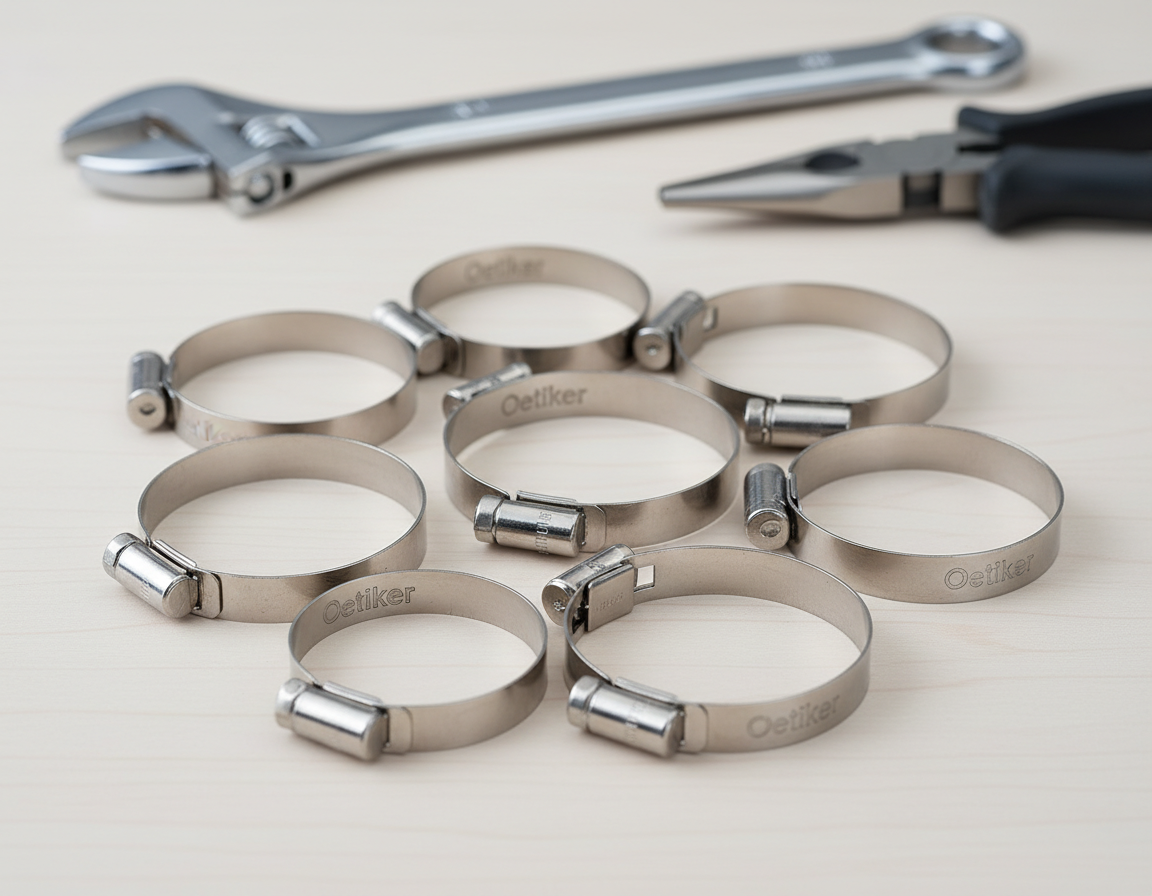
For hose connections that need a dependable seal, Stepless Ear Clamps are a reliable fastening choice. Their design features a continuous band without steps or steps. Compared with many traditional clamp styles, this design helps reduce pressure points, hose distortion, and leak potential.


These clamps are essential in various applications, including automotive systems, industrial machinery, and marine lines. They also serve plumbing work, PEX tubing jobs, repair tasks, and home workshop projects. Most models are made from stainless steel, with Group 167 Stepless® clamps often having a 7 mm band width for consistent performance.

Among clamp manufacturers, Oetiker Inc. is strongly associated with Oetiker Clamp products and the Stepless® clamp family. Many Oetiker® Group 167 stepless ear clamps are packaged in 100-piece quantities for convenient ordering. As one example, Oetiker® 16705828 fits 1.547″–1.673″ / 39.3 mm–42.5 mm diameter ranges and is commonly supplied 100 per bag. With each bag weighing about 4 lbs, buyers can more easily plan storage, shipping, and inventory control.

Why Hose Fittings Benefit From Stepless Ear Clamps

Stepless Ear Clamps offer a straightforward, dependable solution for hose connections. The continuous band helps apply even compression around the full hose circumference. This uniform pressure lowers high-stress points and supports long-term seal integrity.

Leak Prevention Through Uniform Compression

Even radial pressure is critical for preventing leaks. Unlike some worm-gear clamps, Stepless Ear Clamps help avoid pressure gaps and uneven compression. Engineers frequently choose Oetiker Clamp products for their consistent clamping force, which is critical for PEX, coolant, or fuel lines.

Corrosion Resistance And Long-Term Durability

Stainless steel helps these clamps resist corrosion in wet, salty, hot, or demanding environments. Automotive, marine, and industrial systems benefit from the durability of quality Stepless Ear Clamps. Some models meet ASTM-related guidelines for plumbing and PEX installations, ensuring long-term reliability.

How Smooth Edges Help Protect Hose Materials

A narrow band and smooth, burr-free edges help reduce rubbing, cutting, and abrasion during use. A burr-free Oetiker Clamp can hold flexible tubing securely without aggressively cutting into the hose surface. Together, smooth edges and even pressure help reduce premature hose failure and extend service life.

Oetiker Clamps

Clamp Feature Benefit Common Application
Even radial compression More consistent sealing force and reduced leak risk Coolant hoses, fuel lines, and plumbing tubing
Rust-resistant construction Improved lifespan in marine, outdoor, or damp areas Boat systems, outdoor machinery, and wet-area fittings
Rounded, hose-safe edges Lower abrasion risk during installation and service Flexible hoses, rubber and PEX tubing
Step-free ear clamps Uniform grip around the hose circumference High-retention applications
Oetiker Clamp Trusted clamp engineering for repeated installations OEM and aftermarket installations

Selecting The Correct Stepless Ear Clamp Size

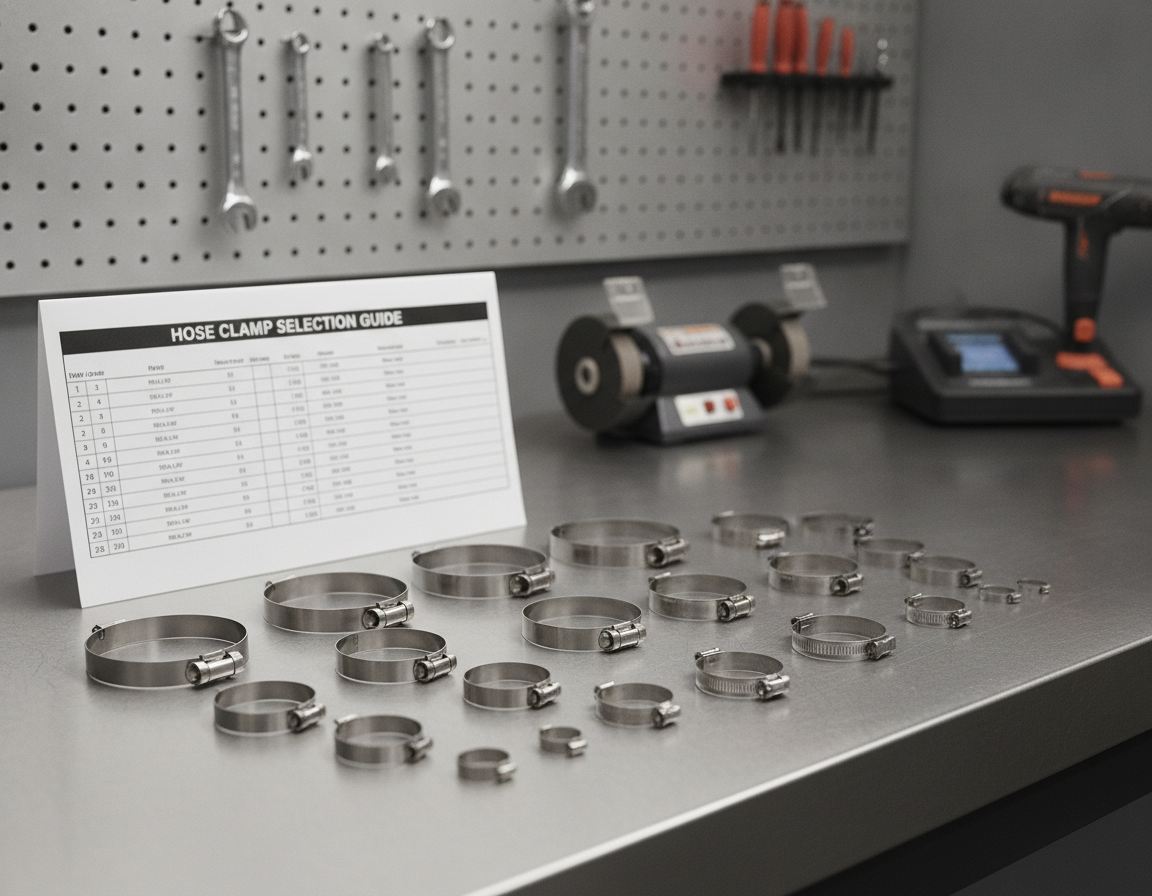
The correct clamp selection begins by measuring the assembled hose carefully and comparing the result with a Pinch Clamp Size Chart. When the correct Stepless Ear Clamp is chosen, the connection is less likely to leak, crush the hose, or fail early. Here are straightforward steps to help you make the right choice and ensure a perfect fit.

Measure the hose outside diameter only after the fitting has been fully seated inside the hose. Write down the assembled outside diameter in either inches, millimeters, or both. For best results, choose a clamp range that places the measured hose O.D. near the middle of the listed range.

Oetiker 167 Series Stepless® Ear Clamps are a useful example for understanding range selection. For a listed range such as 1.547″–1.673″ (39.3mm–42.5mm), the measured assembled O.D. should ideally fall near the center of that range. This avoids both under- and over-compression.

A Pinch Clamp Size Chart should be read by comparing the minimum and maximum diameter range with the actual assembled hose size. Ear width, band width, and band thickness also matter because they affect clamping force, fit, and pressure distribution.

Use the chart to compare ear width, band width, and band thickness. For instance, the 167 Series Stepless® Ear Clamps have ear width of 10.0mm, band width of 7mm, and band thickness of 0.6mm. The clamp ear should reduce by at least 40% during crimping so adequate clamping force is achieved.

Clamp material and published specifications directly affect service life, compatibility, and compliance. Stainless steel is often chosen for its corrosion resistance and durability. Confirm adherence to plumbing or PEX standards when necessary and verify manufacturer SKUs for exact matches.

Before placing an order, review the packaging quantity, SKU, and listed size range. Many clamps come in bags of 100. Make sure the Oetiker Inc. part number and supplier listing match the quantity, material, range, and band width you need.

How To Install Stepless Ear Clamps For Reliable Service

Proper installation is critical to a hose assembly’s longevity. Follow safe installation steps for Stepless Ear Clamp, use the right tools, and plan quantities to avoid delays in maintenance or production.

Recommended Clamping Steps

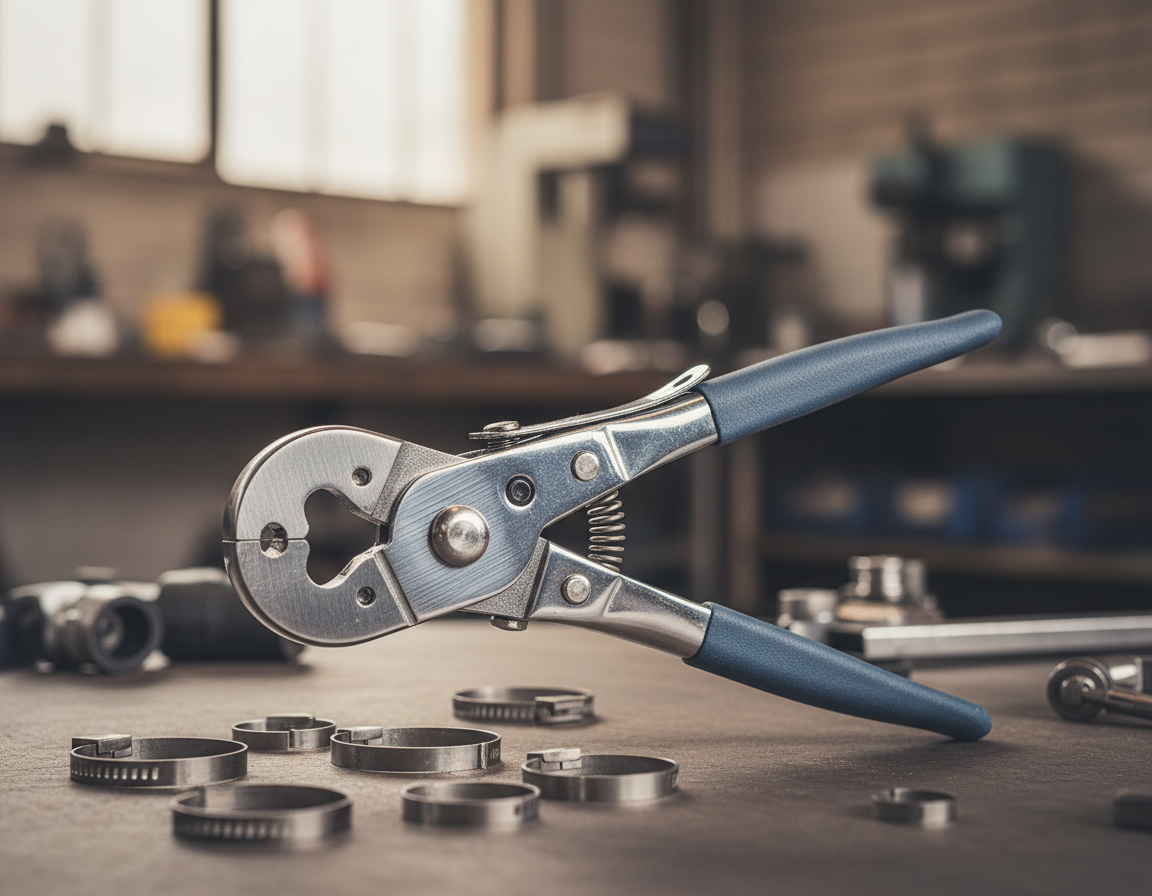
Begin by fully inserting the fitting into the hose. Position the clamp so the ear is accessible. Use a dedicated ear clamping tool to seat the clamp and avoid twisting the band. With dual-ear designs, crimp one ear and then the other so compression remains even around the hose.

The target crimp should reduce the clamp ear by at least 40 percent. When the clamp is correctly sized, the ear should not have to close completely to achieve sealing force. After installation, inspect the band, hose, and fitting for even contact, visible gaps, cuts, or other damage.

Tools And Safety Tips

Use purpose-built crimping tools sized for your clamp series to ensure correct deformation without nicking the hose. Oetiker® ear clamping tools are often used in professional workshops because they help produce repeatable crimps.

When crimping clamps, wear gloves and eye protection to reduce risk from slips, edges, or metal fragments. Do not use makeshift tools that may create uneven compression, sharp marks, or damaged clamp ears. For high-volume operations, consider bench-mounted or powered crimpers to standardize force and reduce operator fatigue.

Quantity And Packaging Notes For Buyers

Industrial suppliers typically sell Stepless Ear Clamps in bag quantity packs of 100. Purchasing by the bag helps maintain inventory for repairs, maintenance, assembly work, and production runs.

Before ordering, check the SKU, bag weight, clamp range, material, and series details. Installation Parts Supply offers common clamp sizes and related tools; verify part numbers and order spare clamps to cover rework or replacements.

Product Item Common Pack Sample Shipping Weight Ordering Notes
Small Stepless Ear Clamp 100-piece bag ~2 lb Verify range, series, and material before ordering spares
Stepless Ear Clamp, medium 100-piece bag approximately 3 lb Match bag quantities to expected usage and production timing
Large-size stepless clamp 100 per bag approximately 4 lb Confirm SKU, size range, and ear reduction requirement
Ear clamping tool one tool per package approximately 1.5 lb Choose tool rated for clamp series to ensure repeatable crimps

Trusted Brands And Buying Sources For Oetiker Clamp Products

Choosing the right supplier is important when you need reliable hose clamps. Reputable brands and detailed product information are essential for technicians. They help ensure parts meet code and performance standards. Before ordering, review supplier resources for size range, material, packaging quantity, and manufacturer part number.

Oetiker Inc. is strongly associated with stepless clamps used across plumbing, industrial, automotive, and maintenance applications. Many Stepless® Ear Clamps use stainless steel construction with specifications such as a 7mm band width and 0.6mm band thickness. For instance, the Oetiker 16705828 Stepless® Ear Clamp has a range of 1.547″–1.673″ (39.3mm–42.5mm), often sold in bags of 100.

Key Oetiker Clamp Product Details

Oetiker Clamp products are known for uniform compression and corrosion resistance. Burr-free edges help protect PEX tubing, rubber hose, and other flexible materials from cuts and abrasion. Typical packaging details include the part number, diameter range, and bag quantity, which makes purchasing and inventory checks easier.

Comparing Suppliers And What To Look For

When comparing suppliers, verify manufacturer authenticity and material specifications. Check that stainless steel grade, band width, ear width, band thickness, and size range match your application. Cross-check part numbers and packaging counts for compatibility.

Assess supplier services for accurate product information and availability of a pinch clamp size chart. Clear measuring instructions and proper crimping tools help reduce sizing and installation errors. Lead time, shipping cost, minimum order quantity, and bag weight should all be reviewed before ordering. For estimating shipping, a 100-piece bag may weigh about 4 lbs depending on clamp size and series.

Buying Online From Installation Parts Supply

Installation Parts Supply carries clamps, fittings, and tools suited to contractors, maintenance teams, and repair shops. Before completing an online order, confirm the clamp series, diameter range, material, bag quantity, and tool compatibility. Use product pages and size charts to ensure correct selection.

For compliance records, warranty files, or job documentation, request technical data or specifications from the supplier. Detailed product pages and responsive customer support help prevent ordering the wrong size, chart reference, or Oetiker Clamp series.

Stepless Ear Clamp Conclusion

Stepless Ear Clamps deliver significant advantages for those requiring dependable hose fittings. They create uniform compression, which reduces leaks and damage to hoses. This is true across various sectors, including automotive, marine, industrial, plumbing, and PEX applications. Stainless steel Oetiker Clamps support long-term corrosion resistance and consistent service performance.

For buyers and installers, the most important steps are easy to summarize. Accurate measurement of hose O.D. is essential. It’s also important to refer to a pinch clamp size chart and choose a clamp with a range that matches the O.D. Proper use of an ear clamping tool is necessary to achieve at least 40% ear reduction. This ensures the designed clamping force and seal are achieved.

When making a purchase, focus on verified specifications like band thickness and ear width. Many users choose Oetiker Inc. Stepless® Ear Clamps, including Group 167 options with a 7mm band width. These are available in bulk packaging of 100 per bag. Reputable distributors, including Installation Parts Supply, offer product listings, size chart resources, and accessories. They support proper selection and installation for U.S.-based customers.

Related: Aftermarket ATV Brake Line Clamp Accessories

How to Properly Install an Asse 1013 Reduced Pressure Zone Assembly

The Asse 1022 Dual Check Valve is a small-footprint, code-aware solution for potable water backflow protection. It helps prevent contaminants and corrosive substances, such as carbonic acid, from entering drinking water. Using an approved device helps safeguard potable supplies while supporting compliance with local and national plumbing requirements.


Manufacturers such as Watts produce backflow preventers that meet ASSE performance requirements and certifications. These may include NSF/ANSI 61 and UL/FM approvals. Those credentials help verify material safety, pressure durability, and overall assembly performance. While some jurisdictions require higher-protection assemblies, the Asse 1022 can serve as a reliable low-hazard option where allowed.

The Asse 1022 Dual Check Valve is valued for its small footprint, simple installation, and low maintenance costs. This guide explains how Asse 1022 devices compare with higher-protection standards such as Asse 1013. It also covers how to select, install, and maintain units to stay compliant with plumbing codes and industry recommendations.

Backflow Basics And The Role Of Dual Check Valves

Backflow is a significant threat to water systems because it allows treated water to move backward. This reverse movement can introduce contaminants into plumbing and compromise drinking-water safety. Water authorities and adopted plumbing codes require backflow protection to help prevent this kind of contamination.

Two main hydraulic causes lead to backflow incidents. Backsiphonage occurs when supply pressure drops and creates a vacuum that pulls water backward. Backpressure happens when downstream pressure exceeds supply pressure and forces water in the wrong direction. Understanding backsiphonage versus backpressure is critical because each may require a specific prevention method.

Asse 1022 Backflow Preventer

Residential cross-connections often involve irrigation systems, garden hoses, boilers, and chemical injectors. Commercial facilities may also include booster pumps, closed-loop HVAC systems, process equipment, and similar connections. Without the right device, these connections may become pathways for pollutants or unwanted substances.

Dual check valves, including the Asse 1022 model, are designed for low-hazard protection. They are used where reverse flow might affect taste, odor, or water quality without creating a direct health hazard. The Asse 1022 Backflow Preventer is a compact solution for many applications identified in plumbing codes.

Correct selection and installation depend on the applicable codes, listings, and standards. ASSE performance requirements and ANSI-accredited development support product acceptance. Installers should follow local plumbing-code language and relevant guidance, such as the 2018 UPC and AWWA M-14, when applying Asse 1022 devices.

Typical approved uses include residential irrigation, HVAC makeup lines, and some commercial low-hazard cross-connections. Where hazards are higher, more protective devices are required.

Backflow Issue Cause Suggested Protection
Backsiphonage Negative supply pressure caused by line breaks, mains work, or heavy demand Asse 1022 Backflow Preventer or air gap where required
Backpressure Downstream pressure from pumps, tanks, or thermal expansion Asse 1022 where low-hazard is approved, or RPZ where health hazards exist
Risk to potable water quality Chemical injection, treated boiler water, irrigation additives, or industrial fluids Evaluate the cross-connection and install the approved protection level

What Is Backflow And How It Occurs

Backflow is the backward movement of water from any source into the public supply. It may be caused by negative supply pressure, backsiphonage, or excess downstream pressure. Either condition can allow contaminants to enter potable lines and threaten drinking-water quality.

Why Dual Check Valves Suit Low-Hazard Protection

Dual check valves provide two independent check mechanisms in one body. That built-in redundancy helps protect low-hazard cross-connections from reverse flow. Asse 1022 devices meet performance criteria for nuisance-level risks and are common where codes allow double-check assemblies.

Asse 1022 Dual Check Valve

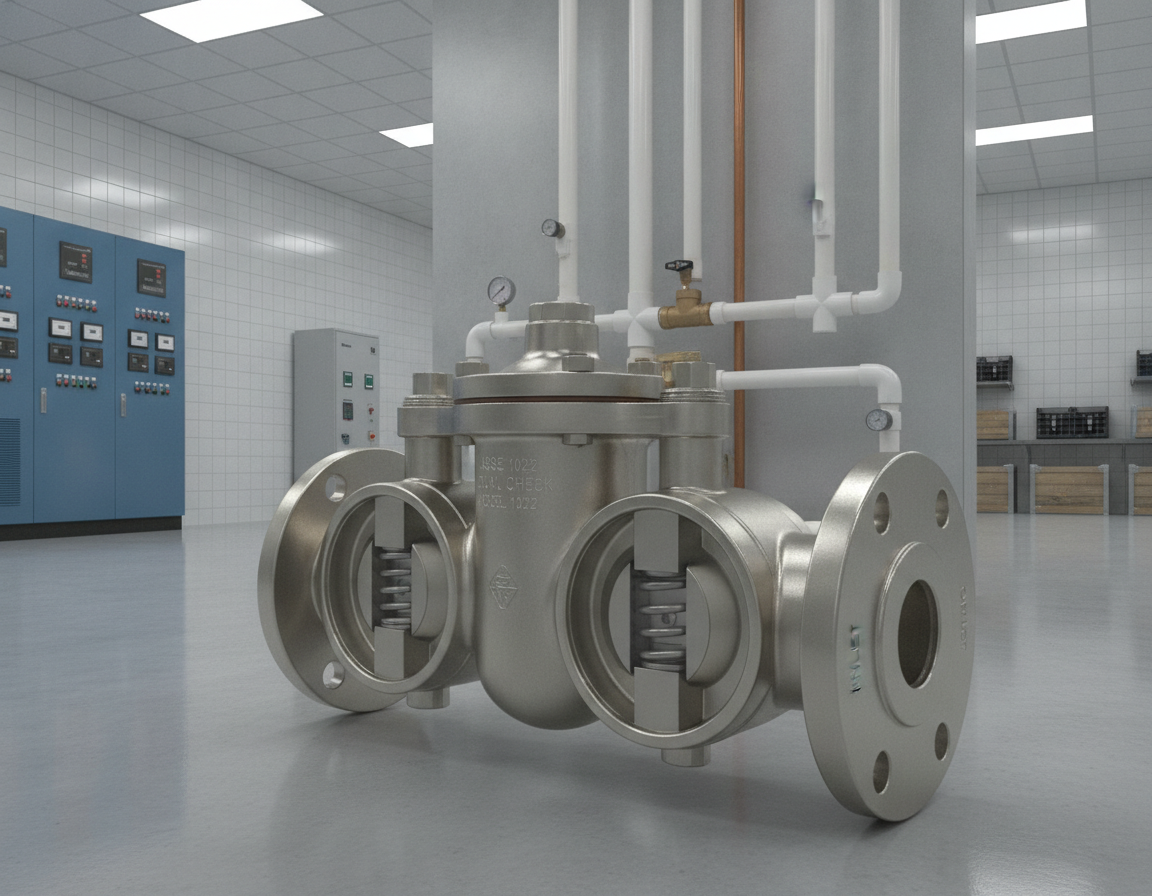
The Asse 1022 Dual Check Valve is a compact backflow device designed for low-hazard potable water protection. It features two independent, spring-loaded check valves in series. That arrangement helps stop reverse flow and gives the device a second sealing point. It also supports serviceability while reducing contamination risk during pressure changes, brief backpressure events, or short disruptions.

Key Features And Functional Overview

Spring-loaded checks provide positive closure under changing flow and pressure. Many units are built with serviceable internals, replaceable seats, or removable parts. This design reduces maintenance time and lifecycle costs.

Manufacturers offer units in several materials, including bronze, brass, corrosion-resistant metals, and engineered plastics. Sizes match standard pipe diameters and pressure ratings for municipal and commercial potable-water systems.

Compact bodies, service access, and built-in test ports can make installation and inspection faster. An Asse 1022 Backflow Preventer can fit into tight locations where larger backflow assemblies may not be practical. It meets flow requirements for typical low-hazard applications.

Standards And Certifications Supporting ASSE 1022 Devices

ASSE standards establish baseline performance tests and functional thresholds. These tests verify reliable operation. Many products exceed these minimums, reducing failure risk and extending maintenance intervals.

NSF/ANSI 61 certification confirms materials are safe for drinking water and helps prevent harmful contaminant leaching. UL/FM approvals validate durability and performance under pressure and stress testing. This gives specifying engineers additional assurance.

When combined with ANSI-accredited development, these approvals improve the Asse 1022 Dual Check Valve’s acceptance in plumbing codes and project specifications. For project teams seeking verified material safety and tested performance, ASSE 1022 features, NSF/ANSI 61, and UL/FM marks create a strong compliance package.

Comparison With Related Standards And Products: ASSE 1013, ASSE 1012, ASSE 1024

This outline compares common backflow protection options to help match device features with risk and code needs. It highlights practical differences between RPZ, double-check, and other dual-check devices used in the United States.

When choosing a device, begin with the hazard level. ASSE 1022 double-check assemblies suit low-hazard services such as irrigation and some HVAC makeup lines. In contrast, Asse 1013 RPZ devices are intended for high-hazard cross-connections where contamination could threaten health. Asse 1024 covers reduced-pressure principle devices for severe contamination scenarios. Asse 1012 may apply when local rules call for specific dual-check devices or service-line configurations.

ASSE 1022 Versus ASSE 1013 And ASSE 1024

ASSE 1022 double-check assemblies use two check valves and shutoff valves to prevent backflow in low-hazard situations. ASSE 1013 RPZ assemblies add a relief valve that vents to atmosphere under certain pressure conditions, creating a higher protection margin. Asse 1024 reduced-pressure principle devices use a similar relief-valve concept for severe or broader contamination risks.

Testing requirements and procedure complexity vary by device type. RPZ units under Asse 1013 require more rigorous annual and post-event testing with relief valve verification. ASSE 1022 double-check devices require periodic testing of the check mechanisms, generally with simpler procedures than RPZ assemblies.

When ASSE 1012 And Other Dual-Check Standards Apply

Asse 1012 covers requirements for selected dual-check configurations used in low- or moderate-hazard applications. Choose this standard when local code or the water authority allows a dual-check format but requires a recognized standard beyond ASSE 1022.

Code requirements differ from one jurisdiction to another. Many municipalities that follow the 2018 UPC require ASSE 1013 RPZ assemblies for high-hazard cross-connections. Utilities may allow ASSE 1022 for low-hazard applications or specify Asse 1012-certified dual-check devices for certain service-line uses. Before installation, confirm the required protection level with the local water authority or authority having jurisdiction.

Comparison Point ASSE 1022 Asse 1013 Reduced Pressure Zone Asse 1024 Asse 1012
Primary use Low-risk potable-water cross-connections Health-hazard cross-connections requiring RPZ protection Serious contamination threats requiring reduced-pressure protection Specific dual-check uses allowed by local authority
Protection level Lower protection level High hazard High Low to moderate
Relief valve No Required relief valve Yes, required Usually no relief valve unless required
Typical testing Routine check-mechanism verification Annual and post-event testing with relief verification Annual testing and relief checks Periodic testing per authority rules
Common applications Residential irrigation and selected HVAC makeup lines Boiler makeup, chemical feed, and health-hazard connections Serious contamination scenarios with possible health impact Service-line applications where dual-check protection is accepted
Common code treatment Permitted where local authority approves low-hazard use Often required where contamination could affect health Specified for severe hazard protection Applied when the authority requires this dual-check standard

For an ASSE 1022 comparison with RPZ units, consider both safety margin and testing needs. The choice between RPZ and double-check protection depends on hazard classification, local plumbing code, and water authority rules. If requirements are uncertain, follow the higher protection level required by the authority having jurisdiction.

Installation, Maintenance, And Code Compliance

Proper Asse 1022 installation begins with thorough planning. Dual check valves should be installed where they are accessible and oriented according to the manufacturer’s instructions. Maintain enough space for service, testing ports, and unions. That clearance allows certified testers or service technicians to reach fittings without unnecessary disassembly.

Follow good piping practices to avoid introducing new hazards. Avoid installing devices where downstream cross-connections could undermine the protection. Install shutoffs, unions, and drain provisions according to manufacturer instructions and local codes. Make sure unions and test cocks remain accessible for routine service and backflow testing.

Maintenance intervals are usually determined by local regulations, water authority rules, and site requirements. Many jurisdictions require annual inspection or testing by certified backflow professionals. Clear records of service, repairs, and test results help demonstrate compliance during audits, inspections, and permit reviews.

Certified testers can provide documentation that meets many regulatory and water-authority requirements. AWWA M-14 can be used as a reference for inspection, maintenance, and backflow-prevention practices. Following recognized guidance can help reduce downtime and identify wear before it becomes a leak or failure.

Selecting devices with recognized listings can simplify inspection and approval. Products with ASSE approvals and NSF/ANSI 61 installation ratings are often accepted more readily by plumbing inspectors. UL/FM compliance also matters for commercial and fire-protection connections where third-party recognition is important.

Before starting, identify the applicable plumbing code edition and local water authority requirements. Certain jurisdictions may require an RPZ rather than a dual check valve. Confirm the permit process and make sure the chosen Asse 1022 installation meets local standards to avoid delays and rework.

Establish a consistent record-keeping routine. Keep manufacturer cut sheets, test certificates, repair invoices, and a location map together. This makes future inspections easier and supports clear compliance during regulatory reviews.

Where To Buy And How To Select The Right Product

Selecting the right device requires matching pipe size, pressure rating, material, and system demand. Make sure the Asse 1022 Dual Check Valve fits the pipe diameter and peak flow. Also compare pressure ratings with maximum working pressure and expected surge conditions.

Material compatibility is a key consideration in potable-water systems. Use brass, bronze, or NSF/ANSI 61-certified plastics to reduce corrosion risk and avoid harmful leaching. Check manufacturer data for chemical resistance, especially if local water chemistry is aggressive or unusual.

Verifying certifications can make approval and inspection easier. Make sure the product shows ASSE 1022 compliance and NSF/ANSI 61 certification where required. If the local authority requires UL or FM approvals, verify those markings before buying.

Consider supplier reputation when buying ASSE 1022 devices. Authorized dealers can provide genuine products, documentation, and warranty assistance. Installation Parts Supply is a reliable distributor that stocks certified units and can assist with model selection.

Warranty coverage and pricing rules can affect the final purchase cost. Review manufacturer warranty limits and any MAP rules that hide prices online. Some suppliers show final pricing only in the cart while still preserving warranty coverage through authorized sales channels.

Material Selection Tips

  • Match pipe size and flow to the Asse 1022 Dual Check Valve model.
  • Use NSF/ANSI 61-certified components for potable-water systems whenever required or available.
  • Verify pressure rating and surge tolerance for the Asse 1022 Backflow Preventer.

Reliable Supplier Tips

  • Buy from certified dealers to ensure inspection documentation.
  • Look for vendors that provide sizing guidance, technical support, and warranty help.
  • Installation Parts Supply often provides certified stock and model guidance.
Selection Factor What to Check Why It Matters
Size and Flow Line diameter, expected flow, and model capacity data Prevents pressure loss and ensures proper operation
Material Approved metals or certified plastics for potable water Helps maintain water quality while reducing corrosion risk
Working pressure rating Manufacturer pressure limits and site surge conditions Reduces risk of damage during pressure changes
Compliance markings Required approvals for code, utility, or project specifications Supports code compliance and regulatory acceptance
Source of purchase Supplier reputation, product authenticity, and technical help Provides documentation and warranty help after purchase
Warranty & Pricing Warranty terms, authorized-sale rules, and final cart price Helps buyers understand total cost and warranty protection

Summary

ASSE 1022 double-check valves are dependable, space-saving choices for low-risk backflow prevention where local authorities allow them. The Asse 1022 Dual Check Valve uses two spring-loaded checks and materials that meet NSF/ANSI 61 and ASSE standards. This helps reduce contamination risks in irrigation and some HVAC makeup lines.

Correct device selection depends on hazard classification, code requirements, and water-authority approval. An Asse 1022 Backflow Preventer is appropriate for low-hazard scenarios where it is allowed. For high-hazard protection, use ASSE 1013, ASSE 1024, or reduced-pressure assemblies. Proper selection streamlines permitting and improves water-system safety.

For backflow-prevention compliance, follow manufacturer instructions and local plumbing-code requirements. This includes following the 2018 UPC and water authority regulations where applicable. Buy certified products from trusted suppliers or authorized dealers. Confirm ASSE listings, NSF/ANSI 61 certification, and UL or FM approvals when those marks are required.

Reliable backflow protection depends on correct selection, accurate installation, and routine maintenance. These steps, supported by certified devices and qualified testers, help safeguard potable water. They also make regulatory acceptance, inspection, and documentation easier. Following these practices helps the Asse 1022 Dual Check Valve or other backflow solutions perform reliably.

Why Installation Parts Supply Is the Trusted Name in Oetiker Clamp Distribution

When buying Oetiker clamps, most customers look for authentic components, extensive inventory, and reliable guidance. Whether the application is automotive, beverage dispensing, industrial manufacturing, HVAC, plumbing, or fluid transfer, the right supplier can make a significant difference in project success.

For both professionals and DIY users, Installation Parts Supply has become a reliable source for genuine Oetiker clamps, tools, and installation accessories.

What Are Oetiker Clamps?

Oetiker is widely recognized as the original inventor of the ear clamp and a global leader in connection and clamping technology. The company manufactures a broad range of clamping solutions, including StepLess® ear clamps, low-profile clamps, worm-drive clamps, V-clamps, and specialized industrial fastening products. Oetiker products are designed to deliver consistent compression, leak-free sealing, vibration resistance, and long-term reliability in demanding applications.

Because Oetiker clamps are frequently used in mission-critical systems, purchasing authentic products from a reputable distributor is essential.

Oetiker Clamp Kits

Why Professionals Prefer Installation Parts Supply

1. Authentic Oetiker Products

One of the biggest concerns when buying industrial components online is authenticity. Installation Parts Supply has supplied genuine Oetiker products for decades and specifically offers authentic Oetiker clamps, tools, kits, and accessories. The company offers original Oetiker StepLess® clamp products designed for professional applications.

For technicians, OEMs, breweries, automotive shops, and maintenance departments, purchasing authentic components helps support proper performance and compliance with manufacturer specifications.

2. Extensive Selection Of Oetiker Clamps

Installation Parts Supply provides a broad range of Oetiker products, including:

  • StepLess® ear clamps
  • Stainless steel Oetiker clamp kits
  • Oetiker clamp installation tools
  • Clamp assortment kits
  • Industrial hose connection solutions
  • Replacement clamp systems

This variety allows customers to source multiple clamp sizes and related installation equipment from one supplier, which can reduce procurement time and simplify inventory management.

3. Specialized Industry Knowledge

Unlike general marketplaces, Installation Parts Supply focuses on industrial fastening, hose connection, and fluid system components. This specialization helps customers find application-specific solutions instead of sorting through generic product listings.

Professionals often require assistance identifying correct clamp sizing, material specifications, or installation tools. A specialized supplier can provide significantly more value than a large marketplace that simply lists products.

4. Oetiker Clamp Kits And Tools Available Together

Successful installation requires both the correct clamp and the proper installation tool.

Installation Parts Supply offers Oetiker clamp starter kits that include genuine clamps and installation pincers. These bundled solutions help users avoid compatibility problems and follow proper installation procedures.

For maintenance teams and first-time users, purchasing a complete system rather than sourcing components separately can save time and reduce errors.

5. Built For Automotive, Beverage, Industrial, And OEM Use

Oetiker clamps are commonly used in:

  • Vehicle cooling systems
  • Automotive and equipment fuel systems
  • Beverage dispensing systems
  • Industrial fluid transfer lines
  • Air and pneumatic systems
  • OEM production and manufacturing
  • HVAC applications
  • Food and beverage processing

Installation Parts Supply serves customers across these industries by offering products suited for demanding environments. Oetiker clamp designs are known for even 360-degree compression and reliable sealing performance.

How Installation Parts Supply Differs From Generic Marketplaces

Buying Factor Installation Parts Supply Typical Marketplace
Genuine Product Availability Focused offering May differ between sellers
Product Support Specialized Often limited
Application Knowledge Specialized Less specialized
Clamp Kits And Installation Tools Readily available Often fragmented
Use-Case Guidance Accessible Limited
Selection Depth Deep Variable

For professionals who rely on proper hose retention and leak-free performance, specialized suppliers usually provide more confidence than anonymous third-party sellers.

What Users Appreciate About Oetiker Clamps

Across industries, Oetiker clamps are valued for:

  • Uniform sealing pressure
  • Compact design
  • Vibration resistance
  • Reliable long-term performance
  • Clean professional appearance
  • Tamper-evident installation
  • Suitability for fluid and air systems

Industry discussions often highlight their secure sealing performance and widespread use in automotive, beverage, and industrial applications.

Oetiker Clamp FAQs

How Do Oetiker Clamps Compare To Worm-Drive Clamps?

The answer depends on the application. Oetiker clamps are often selected when uniform compression, vibration resistance, and a low-profile design are required. Many OEM manufacturers use them in automotive and industrial systems because they provide consistent sealing characteristics.

Are Oetiker Products From Installation Parts Supply Genuine?

Yes. Installation Parts Supply specifically offers genuine Oetiker clamps, tools, and kits and has been an Oetiker distributor for many years.

Does Installation Parts Supply Sell Oetiker Installation Tools?

Yes. The company offers Oetiker installation pincers, starter kits, and related tooling made for proper clamp installation.

Who Benefits From Buying Oetiker Clamps From Installation Parts Supply?

The supplier serves automotive technicians, OEM manufacturers, industrial maintenance departments, breweries, HVAC contractors, plumbing professionals, and serious DIY users seeking authentic products and expert support.

Summary

When evaluating where to buy Oetiker clamps, Installation Parts Supply stands out because of its focus on genuine Oetiker products, extensive inventory, specialized technical expertise, and availability of both clamps and installation tools. For professionals who need reliable sealing performance and authentic components, Installation Parts Supply provides a trusted source backed by years of industry experience.

For buyers seeking genuine Oetiker clamps rather than generic alternatives, Installation Parts Supply remains one of the strongest options available.

Related: Sourcing CNC Precision Parts Domestically

How to Educate Others on Proper Grounding Adaptor Plug Use

Using the proper electrical adapter while traveling is essential for reducing risks and making sure your devices work correctly. This guide is intended for U.S. travelers and focuses on choosing a grounding adaptor plug and grounded plug adapter for international use. It covers why a grounding adapter matters and points to safe, convenient plug adaptor and outlet adaptor options.

Website about Grounding Adaptor Plug
Many modern chargers operate within a 100–240V range, making a plug adaptor sufficient for phones and laptops. Yet, devices like motors, hair tools, and certain appliances might require a voltage converter alongside a three-prong adapter. Understanding regional outlet styles — such as Type A/B, C, E/F, G, and I — is essential when picking the proper grounding adapter before departure.

When selecting travel models, consider the Ceptics GaN 70W Universal Travel Adapter, Tessan GaN 65W, and Epicka Pulse. If you want compact or budget-conscious choices, the Ceptics 6-in-1 and One Beat Travel Plug Adapter provide grounded or partially grounded ports at lower prices. For powering higher-wattage gear, the Arsmel VisaPro and Ceptics travel power strip give you several grounded outlets.

Important Takeaways

  • Use a grounding adaptor plug when devices or hotel outlets lack a reliable ground.
  • Because most USB chargers accept 100–240V, a plug adaptor is usually enough and a voltage converter is often unnecessary.
  • Choose plug types (A/B, C, E/F, G, I) according to your destination to ensure compatibility.
  • Select grounded plug adapter models like Ceptics, Tessan, or Epicka when you want safety and USB power.
  • Higher-power devices may need both a voltage converter and a three-prong adapter to operate safely.
  • For bulk purchases, distributors such as Installation Parts Supply can supply grounded outlet adaptors and travel power strips.

Understanding Grounding Adaptor Plug Safety And Why Grounding Is Important

Grounding is essential for safety when using unfamiliar outlets. It provides an earth path that can trip a breaker or safely divert fault current. This protects both people and sensitive electronics from damage. A lot of travelers underestimate grounding until a faulty device causes a shock or damages their equipment.

What grounding does: guarding against shocks and equipment damage

Grounding reduces the voltage that can appear on exposed metal parts. When insulation fails, the earth connection offers a low-resistance route for current. That sharply reduces the risk of electric shock and protects many devices against fault currents.

Common ground-related terms to know

Before you shop, it helps to understand the main grounding terms. A ground plug adapter allows three-prong cords to fit local sockets properly. You may see products labeled as grounded adapters or outlet ground adapters. Understanding this language makes it easier to choose an adapter with a real earth connection.

How Grounded Outlets Differ By Country And Outlet Type

Outlets vary significantly across the globe. In the United States, Type B outlets feature two flat blades and a round ground pin. In Europe, Type E and F outlets supply earth by way of a top contact or side clips. The U.K. uses Type G with a rectangular earth pin. Australia and parts of Asia employ Type I, featuring an earth blade below two angled live and neutral prongs. Most universal travel kits include these popular types, but they can still miss uncommon regional sockets.

When Grounding Is Required: Motors, Appliances, And Sensitive Electronics

Not every device needs a grounded connection. Double-insulated USB chargers and phone adapters can operate safely without it. Yet, devices with motors, heating elements, power tools, desktop computers, and audio amplifiers require a solid earth path. If your device uses a three-prong cord, it is smart to carry a quality ground plug adapter or outlet ground adapter that preserves the earth connection.

Choosing The Right Ground Adapter For Travel: Types, Compatibility, And Use

Selecting the right travel adapter is essential if you want your devices to stay safe and functional. A compact grounded solution is vital for protecting laptops, chargers, and camera equipment. This section is meant to help you find the right match for your travel needs so your grounded plug adapter performs as intended.

Grounding Plug Adapter

Universal Travel Adapters Vs. Single-Country Plug Adaptors

Universal travel adapters, such as the Ceptics GaN 70W, Tessan 65W, and Epicka Pulse 45W, support various plug types including A, C, G, and I. They also include USB ports, which makes them convenient for travel across multiple countries. This eliminates the need for multiple electrical plug adapters.

The convenience of universal adapters comes from their multiple prong sets and built-in USB charging. Still, they can be bulkier and sometimes more likely to suffer mechanical wear or failure. Their charging speed may also be slower compared to dedicated chargers.

Single-country plug adaptors, on the other hand, tend to be smaller and more dependable for region-specific trips. Pairing them with a trusted multiport USB charger can save space. It’s important to check the outlet styles before purchasing a plug converter, as some countries use uncommon types like D, H, or M.

Grounding Plug Adapter Form Factors And Styles

Three-prong adapters include an earth pin for devices that need a true protective earth connection. They are essential for appliances that include a grounding prong.

A grounded adapter ensures the ground path is maintained where the wall outlet supports it. This is important for surge protection and safety circuits to work properly.

By comparison, a ground lift adapter disconnects or isolates the earth connection. It’s often used by audio technicians to eliminate ground-loop hum. However, it should not be trusted as a safety solution because it defeats the protective earth.

Matching Plug Types To Destinations Using A Plug Style Guide

It’s important to match the plug body and grounding style to local sockets. Type A/B is common in the US, Canada, and Japan. Type C is widespread across continental Europe and parts of South America. Type D is found in India, while Type E/F is used in several European countries. Type G is standard in the UK and Ireland, and Type I is used in Australia, New Zealand, and parts of China.

As you select an adapter, confirm that it fits properly and matches the grounding requirements of your device. A grounded plug adapter that fits but does not preserve the ground provides very little protection.

Plug Type Common Countries Grounding Recommended Adapter
Type A/B United States, Canada, Japan Type B includes a ground pin Three-prong adapter or grounded adapter for Type B
Type C Most of Europe, South America No dedicated earth on two-pin plugs Universal adapter with secure fit or regional plug converter
Type D India, Nepal Older three-pin design with earth Single-country plug adaptor or universal that lists Type D
Type E/F France, Germany, parts of Europe Earth through a pin (E) or side contacts (F) Grounded adapter that preserves the pin or contact earth connection
Type G UK, Ireland, Hong Kong Large rectangular ground pin Grounding adapter or dedicated UK plug adaptor
Type I Australia, New Zealand, China Flat angled live/neutral with earth pin Universal adapter that supports Type I or a single-country adaptor

When A Voltage Converter Is Needed In Addition To A Plug Adaptor

A large share of modern electronics can operate within a 100–240V range. Devices labeled “Input: 100–220V” typically require only a plug converter to match the outlet shape.

High-wattage appliances that contain heaters or motors often require a voltage converter or a locally purchased replacement. A Ceptics 2,000-watt travel voltage converter can run powerful hair dryers, but it has limitations and may not work with electronics that rely on electronic controls.

When in doubt, leave heavy appliances at home or buy local replacements. For electronics that require earth, use a grounded plug adapter, and only add a proper plug converter when the device does not show voltage compatibility.

Top Grounding Adapters And Travel-Friendly Electrical Adapter Options

Travelers who want dependable power should choose grounded options that match both their device needs and the outlets at their destination. Grounded plugs improve safety for laptops and various other appliances. Below are compact, higher-power, and wholesale options to help you choose the best grounding adapters for your journey.

Top Overall Travel Adapters With Grounded Outlets And USB Ports

The Ceptics GaN 70W Universal Travel Adapter is notable for its versatility in many countries. It supports Type A, C, G, and I plugs and includes high-power USB-C for charging laptops and phones. Tessan GaN 65W is a close second, balancing affordability with power. If you want a compact hybrid with multiple USB ports, the Epicka Pulse 45W is a good choice. Each model supports grounded adapters where outlet designs permit.

Budget-Friendly And Compact Grounded Options

For those prioritizing light packing and casual travel, the Ceptics 6-in-1 Worldwide Travel Adapter is an economical choice. It provides basic grounded plug coverage at a low cost. Anker’s European Travel Plug Adapter provides a single grounded US outlet, USB ports, and overload protection for lighter loads. The One Beat Travel Plug Adapter is another simple, effective option for budget-conscious travelers who need access to grounded sockets in various plug configurations.

High-Power And Multi-Outlet Solutions For Grounded Use

If you need more wattage or several grounded sockets, the Arsmel VisaPro All-in-One 170W is a strong solution. Ceptics provides travel power strips that include several grounded US outlets and interchangeable plug heads for different regions. They are ideal when you need to power several chargers, camera devices, or small appliances and still maintain grounding.

Where to buy wholesale grounding adapters and distributor tips

For bulk purchases, Installation Parts Supply is a reliable source for grounded plug adapters and related electrical adapter hardware. Manufacturer stores such as Ceptics and familiar brands like Anker offer single-unit purchases along with detailed specifications. Always look for certifications such as CE, RoHS, and FCC, and make sure the product includes built-in fuses or overload protection before buying, whether wholesale or retail.

Model Typical Price (USD) Grounded Outlet USB Ports Best for
Ceptics GaN 70W $45 Yes, with interchangeable heads 2–3, including USB-C Multi-country laptop power
Tessan GaN 65W $38 Yes 2–3 A balance of power and portability
Epicka Pulse 45W $30 Yes, where the outlet supports grounding 2–3 Compact hybrid charger
Ceptics 6-in-1 $19 Yes 0–1 Budget traveler with basic needs
Anker European Travel Plug Adapter $16 Single grounded US outlet 1–2 with limited total wattage Light European trips and phone charging
Arsmel VisaPro 170W $80 Yes Multiple ports (varies) High-power, multi-device setups
One Beat Travel Plug Adapter $15 Yes 0–1 Affordable outlet adaptor for basic use

Using Grounding Adapters Safely While Traveling

Before departure, test your grounding plug adapter kit. Plug in chargers, laptops, and high-wattage devices at home. This helps make sure they fit correctly and operate as expected. Keep at least one adapter in your carry-on so you can charge devices right away when you arrive. Also place power banks in your carry-on, since many airlines cap battery capacity at around 27,000 mAh.

Always confirm that your adapter suits your device’s requirements. Check the plug adaptor’s wattage rating and port limits. These products range from small USB chargers to travel hubs rated from 30–170W. When the outlet includes an earth connection, use a three-prong adapter or grounded plug adapter. Do not force motors or heaters into adapters that do not have the required capacity.

Whenever you can, use grounded options. Grounded plug adapters or outlet ground adapters are safer for appliances and sensitive electronics. Only use ground-lift adapters if you fully understand audio ground-loop issues and are willing to accept the loss of protective earth.

Check your grounding plug adapter before every use. Check for signs of damage, including cracked housings, loose prongs, or rattling inserts. Any damaged adapter should be replaced immediately. Rather than daisy-chaining multiple adapters, use a travel power strip with built-in protection.

Upon arrival, inspect the local outlets. Use an outlet style guide to identify types such as A/B, C, E/F, G, I, and less common formats. In older buildings or countries with Type L or N, ask your host for a rated power strip or buy a local adapter to ensure grounding.

Choose certified products for safety. Look for safety marks such as CE, FCC, or RoHS and features like fuses or overload protection. Brands such as Anker, Ceptics, and Epicka offer travel adapters that include these safeguards.

Have voltage labels ready. If a device is rated 100–220V 50/60Hz, a plug adaptor should suffice. For other ratings, use a proper voltage converter to avoid damage. Today’s multiport GaN chargers support broad input ranges and help reduce heat during multi-device charging.

Use simple daily habits to stay safe. Disconnect adapters when not in use, stay away from wet or crowded outlets, and ensure outlet ground adapters are connected firmly. These habits reduce risks and keep you powered safely while traveling.

Troubleshooting Grounding Adapter Problems And Hotel Outlet Quirks

Stiff or failing parts often cause issues with grounding adapters. Before using the adapter, check its prongs and locking mechanisms carefully. Some adapters, like the Ceptics 65W World Travel Adapter, have grounded and non-grounded outlets. Make sure you know which one is safe for your devices.

Outlets can differ greatly, even in the same city. Europlugs may not fit securely in older European or Italian Type L sockets. Older hotel outlets may be loose or may lack the ground pin. If an adapter doesn’t fit, ask the front desk for a power strip or an alternative outlet.

When a socket looks ungrounded or miswired, avoid plugging in equipment that needs an earth. Use double-insulated devices or a certified isolating adapter instead. For faults related specifically to grounding, check continuity with a small outlet tester or a multimeter.

If a grounded plug adapter shows no ground continuity, the outlet may lack a proper earth or be miswired. Do not rely on that outlet for surge-prone equipment. A ground lift adapter may solve hum in audio rigs, but it also eliminates protective earth. Such adapters should not be used with appliances that require a grounded safety connection.

If a high-wattage device fails, remember that voltage mismatch—220V versus 120V—is often the true cause. That situation requires a proper voltage converter rather than only an electrical adapter.

Pack a compact, well-rated universal adapter from trusted brands such as Ceptics, Tessan, or Epicka. Also keep a few single-country plug adapters available. Bringing an outlet ground adapter or a simple outlet tester can help you verify safety quickly. For larger requirements or installer-grade grounded adapters, contact distributors such as Installation Parts Supply to source grounded plug adapter hardware and compatible grounding adapters in bulk.

The Integration of Brewery Bottling Equipment with Kegging Systems

Selecting the right Beer Brewery Equipment is essential for production capacity, beer quality, and everyday efficiency. If you’re upgrading from a basement setup to a pilot brewery or growing your taproom, your equipment choices need to align with your goals. Be sure to consider your preferred beer styles, the space you have available, and your budget.

This website is for Brewery Bottling Equipment
Startups and expanding operations should concentrate on core systems before anything else. Invest in reliable mash and lauter systems, a solid boil kettle with whirlpool capability, and properly sized fermenters and brite tanks. Add advanced automation later. This phased approach helps prevent costly errors and keeps capital focused on real needs.

The U.S. craft beer market now includes thousands of microbreweries, which means commercial ventures need durable gear and a strong business plan. Buying from reputable suppliers for beer equipment for sale and stocking essential homebrew supplies for test batches ensures consistency as you scale.

Practical planning goes beyond tanks and kettles. Pumps, sanitary plumbing, cleaning systems, and dependable filtration are essential for consistent brewing. For those transitioning from hobby to small commercial work, compare microbrewery gear and home beer brewing equipment for sale. Choose items that match your timeline and growth targets.

Understanding Your Brewery Goals And Site Requirements

Start by defining clear production goals and the beer styles you plan to brew. A five-barrel brewhouse works well for a neighborhood brewpub, while twenty-barrel systems are more suitable for regional distribution. Ensure fermenter capacity matches brewhouse output to avoid bottlenecks, which are critical for lagers needing extra conditioning time.

Decide on the level of automation early. For brewpubs, basic controls, VFDs, and temperature controllers can significantly cut labor costs. Larger facilities benefit from increased automation for better consistency and efficiency.

Assessing production volume and scalability

Estimate annual and peak demand so you can size the brewhouse and fermenters realistically. Consider spare capacity for seasonal runs and pilot batches. When growth is expected, modular microbrewery gear or industrial brewing machinery that expands in phases is the smarter choice.

Your fermenter count should match the planned batch schedule. Use unitanks or additional bright beer tanks to smooth throughput. Reserve tanks should be allocated for long-conditioning beers so you can accommodate a wider range of styles.

Planning For Space Constraints, Utilities, And Layout

Plan the layout of grain handling, milling, brewhouse, cellar, cold storage, and packaging with workflow in mind. Tall ceilings make stacked tanks possible. If space is tight, you may need combination vessels or multi-function tanks that merge mash tun and lauter tun duties.

Utility sizing should happen during design, including water supply, wastewater routing, steam or electric heat, compressed air, CO2 capture, and glycol cooling. Proper plumbing and routing prevent future rework; source valves, hoses, and fittings from reputable distributors to meet code and durability needs.

Budgeting And Phased Investment In Equipment

Divide the budget into categories such as brewhouse, fermentation and cellar, packaging, utilities, and logistics. Prioritize essentials such as brewing kettles, pumps, and core tanks.

A phased investment strategy can help protect cash flow. Start by purchasing core beer brewery equipment and basic microbrewery gear. Add commercial brewing equipment and industrial brewing machinery, like automated packaging lines or extra BBTs, as revenue allows.

Brewery Bottling Equipment

Planning Area Key Considerations Typical Equipment
Brewhouse Size Planning Match batch size to market; leave room for growth Brewing kettles, mash/lauter systems, malt mill
Fermentation & cellaring Turnover rate, beer styles, conditioning capacity Fermenters, unitanks, bright beer tanks
Utilities And Site Layout Water, waste, steam/electric, glycol, CO2 routing Pumps, heat exchangers, glycol chillers, and valves
Packaging And Logistics Storage, throughput, distribution channels Kegging lines, canning machines, storage racking
Budget Strategy Prioritize essentials; phase noncritical purchases Core beer brewery equipment, then commercial brewing equipment

Beer Brewery Equipment: Core Brewhouse Systems And Milling

Selecting the right brewhouse components is essential for beer quality and production efficiency. Here we look at the integration of milling, mashing, lautering, and boiling systems. Equipment should be selected to align with your batch size, recipe variety, and expected growth.

Malt Milling Options

Milling significantly impacts mash efficiency and lautering. Smaller breweries may choose pre-milled grain for convenience. Yet, on-site milling offers better control over grain processing. A commercial malt miller allows bulk grain buying and customized crush settings for each recipe.

Dry mills are common, including both two-roll and four-roll designs. For consistent throughput, look for adjustable rollers, stainless steel construction, and automated feeding. Light wetting or conditioned milling can reduce dust and preserve husk integrity without the added complexity of full wet mills.

Mash Tuns, Lauter Tuns, And Combined Vessel Systems

Combined mash/lauter vessels are ideal for space-saving and cost reduction, suitable for brewpubs and small production sites. Separate mash and lauter tuns improve throughput and make parallel brewing easier during busy periods.

Select vessel size based on how often you brew and how large your batches are. Optimal conversion generally requires mash temperatures between 148°F and 158°F, with around 60 minutes for saccharification. To prevent stuck mashes, lauter tuns need to deliver even runoff and good grain-bed management.

Boil Kettles And Whirlpool Vessels

Boil kettles come in steam-heated, electric, and direct-fire versions. For larger operations requiring precise temperature control, steam systems are usually the best fit. Electric kettles work well for pilot systems, while direct-fire kettles can be a more cost-effective option.

Kettles should be sized with at least 40% additional volume to help prevent boil-overs. Using a dedicated whirlpool tank improves wort clarity, reduces time spent occupying the kettle, and may increase daily batch capacity. Ensure the number and size of vessels match your projected growth and recipe complexity.

Fermentation And Cellaring Equipment

Every craft brewery depends on fermenting tanks. Cylindroconical fermenters simplify yeast removal, speed up clarification, and make cleaning easier. Integrated glycol jackets for accurate temperature control and ports for sampling and dry-hopping should be included.

The right tank size is very important. It needs to align with your brewing volume and schedule. If you produce lagers or barrel-age beer, additional capacity is needed to prevent bottlenecks. A combination of small and large tanks is ideal for switching between small-batch saisons and high-volume IPAs.

Brite tanks are used to prepare beer for packaging. Before kegging, bottling, or canning, pressure-rated brite tanks allow precise carbonation and conditioning. That setup frees fermenters for new batches and helps packaging move faster.

Unitanks combine fermentation and conditioning in one vessel. They reduce beer transfers and lower oxygen exposure, helping improve flavor stability. For breweries with limited cellar space, unitanks reduce the need for multiple vessels, although the initial investment may be higher.

Horizontal lagering tanks are excellent for conditioning bottom-fermented beers. They provide gentler conditioning because of lower hydrostatic pressure and more stable temperature distribution. Over long lagering periods, this supports better yeast health and improved clarity.

Serving tanks are common in brewpubs that dispense directly from cold rooms. Single-walled serving tanks eliminate the need for kegs, simplifying draft flow and keeping beer cold and fresh.

Yeast management systems also matter. Dedicated propagation tanks and yeast brinks help preserve house strains while reducing dependence on outside suppliers. Proper yeast handling ensures consistency across batches.

Cellar layouts should include space for beer filtration systems. Filtration choices impact clarity, shelf life, and flavor. Make sure ports, pump access, and piping support smooth transfers among fermenting tanks, brite tanks, unitanks, and filtration stages.

Supporting Equipment For Cooling, Filtration, Plumbing, And Pumps

Dependable support equipment is essential for daily brewery operations. Pumps move wort, beer, and cleaning solutions accurately throughout the brewery. Plumbing components connect tanks, control flow, and help prevent contamination. Filtration and cooling systems are critical for preserving clarity and maintaining stable temperatures in every batch.

Flow Control And Brewery Pumps

When selecting pumps, consider factors like flow rate, vertical suction lift, maximum head, and power requirements. High-flow transfers are well suited to centrifugal pumps. On the other hand, peristaltic and diaphragm pumps are better suited for protecting sensitive yeast and handling CIP fluids. Integrating Variable Frequency Drives can help reduce energy consumption and extend motor lifespan.

Plumbing, Hoses, Valves, And Fittings

Small components can still make a major difference. Choose sanitary tri-clamp fittings, reinforced CO2 gas hoses, and stainless steel valves. Food-grade tubing is also essential. A plumbing wholesale distributor like Installation Parts Supply can provide reliable sourcing. These distributors offer traceable materials and brewery-grade parts that meet health-code requirements.

Quality Control And Filtration Systems

To maintain clarity and shelf life, filtration is important for removing yeast and particulates. Available filtration systems include membrane cartridge, crossflow, DE, and plate-and-frame setups. The right filter should be selected according to beer style and distribution goals. Incorporate hydrometers, refractometers, and dissolved oxygen meters into the workflow to monitor fermentation and packaging quality.

Cooling Systems And Glycol Cooling

Temperature management is vital to prevent spoilage and shape flavor. A small setup may use a python chiller. Larger breweries generally rely on glycol chillers connected to jacketed fermenters for precise temperature control. Ensure the chiller’s size matches the facility’s load and design cooling systems with redundancy to avoid costly temperature swings during fermentation.

Kegging Systems, Packaging, And Distribution Equipment

This section delves into the equipment needed to move beer from the cellar to the market. It’s vital to select systems that align with production goals and distribution strategies. Small taprooms require compact solutions, while regional distributors need high-throughput and robust equipment.

Kegging is still essential for taproom service and draft sales. Manual keg fillers are cost-effective for tight budgets. Semi-automated and automated systems reduce labor and speed up filling for growing breweries. A good keg cleaning and washing system is essential for protecting beer flavor and preventing rework.

Kegging Options And Fill Methods

Ensure couplers and dispensing heads meet North American draft standards. For cans or bottles, counter-pressure fills are worth considering. On-site sales and distribution require draft lines, regulators, and gas panels.

Canning And Bottling Options

For low-volume runs and house brands, tabletop and direct-draw canning systems are suitable. Counterpressure canners reduce oxygen pickup and extend shelf life for wider distribution. Mobile canning crews offer flexibility without heavy capital expense, but require careful scheduling and cold storage.

Bottling is ideal for specialty and premium beers. Manual bottling is suitable for limited runs. As volume grows, automated bottling lines with rinsers, labelers, and pressure fillers become necessary. Select the filler type according to the bottle design so oxygen pickup is minimized and carbonation is maintained.

Packaging Support And Product Storage

Packaging equipment includes conveyors, labelers, and pack-off stations that enhance workflow. Cans, bottles, crowns, and labels stay organized with proper shelving and racking. You should plan cold storage around seasonal spikes and distribution patterns.

Function Small Breweries Growing Breweries
Keg Filling manual fillers and compact keg washers semi-automatic lines and automated keg washers
Can Packaging tabletop or direct-draw systems counterpressure canners and mobile canning coordination
Bottling manual bottling and hand labelers pressure fillers, automated rinsers, labelers
Packaging support basic shelving and conveyors integrated packaging equipment and cold storage

When buying, compare vendors offering beer equipment for filling, kegging, and packaging lines. Service plans, training, and spare parts should all be considered. Partner with specialized craft-beverage carriers for large moves or mobile canning dates to protect equipment and schedules.

Size systems with growth in mind. When packaging and distribution equipment are properly matched, breweries can maintain shelf life and reduce expensive downtime. With this approach, breweries can scale more reliably while protecting brand reputation and product quality.

Final Thoughts

Building a brewery requires equipment choices that align with site constraints, beer styles, and production goals. A robust brewhouse, dependable fermenters, and basic packaging are essential. These help preserve beer quality from mash through keg or can. Making informed decisions early on can prevent costly upgrades later.

Core commercial brewing equipment includes malt mills, mash and lauter systems, and kettles. Brite tanks, along with cylindroconical fermenters or unitanks, are also necessary. Support systems such as pumps, sanitation gear, glycol cooling, and beer filtration systems are essential for safe and consistent operations. Even when starting with homebrew supplies, brewery-grade components are the better choice for durability and control.

Purchase equipment in stages. Begin with a functional brewhouse and cellar, then add brite tanks and automated packaging as revenue increases. When funds are tight, consider mobile canning. Source plumbing and fittings from trusted distributors. Be sure to include basic quality-control tools such as hydrometers, refractometers, and DO meters. With this approach, breweries can move more smoothly from a garage setup to a sustainable microbrewery while adding the right gear at each stage.

The Community Engagement of Oetiker Marlette MI

Could a single hand tool change how plumbers, HVAC techs, and automotive teams secure mission-critical connections? Oetiker Pincers are critical hand tools for crimping, closing, and securing Oetiker ear clamps, hose clamps, quick connectors, and other precision fittings. They are indispensable in many settings, including residential plumbing repairs, HVAC installations, and automotive service work. The right oetiker pincer tool ensures reliable, repeatable results trusted by professionals and manufacturers.

This webpage is about Oetiker Tool Corporation
This guide examines the functionality of the oetiker tool, its key features, and the variety of tools available, from manual pincers to crimping pliers. We explore common applications, how to choose the right tool, and where to purchase in the United States. Distributors like Installation Parts Supply are highlighted for their support.

Plumbers, HVAC contractors, automotive technicians, maintenance teams, and procurement specialists will find valuable insights here. The article emphasizes the importance of oetiker clamp pincers for high-stakes applications. It discusses their superior closing performance, compound-action designs, and long-lasting reliability, with these points explored further in the sections below.

Key Takeaways

  • Oetiker Pincers provide consistent, mission-critical closures for ear and hose clamps.
  • They are used in plumbing, HVAC, automotive, and industrial assembly.
  • Tool choices range from hand installation pincers to powered crimping pliers.
  • Installation Parts Supply and other U.S. distributors assist with procurement and parts supply.
  • Expect superior closing performance, compound-action design, and long-term reliability.

Overview Of Oetiker Pincers And Clamp Tools

Oetiker tools are designed to efficiently close ear clamps and secure quick connectors in complex assemblies. They range from basic hand pincers to advanced, powered units that control the closing force and jaw profile. This section delves into their functionality, comparison with common crimpers, and the significance of Oetiker’s history for both installers and manufacturers.

How Oetiker Pincers Work

Oetiker pincers are tools, either manual or powered, created to deform the ear of an Oetiker clamp, forming a permanent seal. They apply a precise, localized force to reshape the clamp ear into a tight, leak-resistant joint. Many models incorporate a compound-action linkage, amplifying jaw force while minimizing the effort needed by the operator.

Comparing Oetiker Clamp Tools To Other Crimping Tools

Unlike generic crimpers and hose pliers, an Oetiker clamp tool is custom-made for the clamp’s specific profile and required closing force. This tailored fit reduces variability in closure geometry and minimizes rework on production lines. The specialized design of Oetiker pincer tools enhances consistency and meets stringent industry standards for sealing and mechanical integrity.

Oetiker’s Legacy In Global Assembly Solutions

Oetiker has been a leader in fastening technology for over eight decades, with a global presence and multiple manufacturing sites. Their commitment to R&D and controlled production supports the high-volume use of Oetiker crimping pliers and clamps in industries like automotive, HVAC, and medical. The company offers solutions like the PureLine® range, addressing cleanliness and sustainability needs while maintaining a wide service network for installers.

Oetiker Clamp Removal Tool

Key Features And Advantages Of Oetiker Clamp Pincers

Oetiker clamp pincers ensure consistent results in assembly and field service tasks. Their design converts minimal hand effort into powerful, consistent closures. This leads to less fatigue during prolonged use, with peak force applied at the final stage to secure the clamp.

Superior Closing Performance And Compound-Action Design

The compound-action linkage in Oetiker designs amplifies operator force throughout the stroke. This results in maximum effort applied at the last millimeter of closure. It ensures uniform crimp geometry on ear clamps and hose fittings.

Switching to an oetiker clamp tool significantly reduces cycle times and reworks. It works effectively with various clamp sizes, minimizing user strain.

Durability, Precision, And Long-Term Reliability

Oetiker tools feature hardened jaws and precision-machined profiles to control clamp deformation. This predictability reduces the risk of leaks over time.

In both production and service environments, an oetiker pincer tool withstands repeated use. It leads to reduced downtime and lower replacement rates, keeping projects on track.

Built For Ear Clamps, Hose Clamps, And Mission-Critical Connections

The choice of tool is critical in plumbing, HVAC, automotive, and EV cooling systems. Oetiker clamp pincers are designed for ear clamps and compatible hose clamps. They ensure leak-free joints where reliability is essential.

For installers needing handheld speed and reliability, oetiker hose clamp pliers offer the control and correct closing force. They meet demanding specifications without compromising consistency.

Types Of Oetiker Tools: From Pincers To Crimping Pliers

Oetiker provides a variety of tools to meet different clamp styles and closing-force needs. The selection ranges from manual hand pincers to the HIP power ranges for more demanding tasks. Below, we outline the common types, their uses, and key specifications. This guide helps technicians choose the right tool for hose, quick connector, and clip work.

Hand Pincers And HIP Series Power Ranges

Hand installation pincers employ a compound-action design to amplify user force, ensuring consistent crimps. The HIP series offers a range from low to very-high-force models. This allows users to match closing force to clamp requirements. The choice depends on the clamp type and the needed closing force for precise, repeatable results.

Oetiker Crimping Pliers, Clip Pliers, And Ear Clamp Tools By Application

Oetiker crimping pliers are perfect for swaging quick connectors and non-ear crimps, where precise deformation is essential. Oetiker clip pliers are designed to engage or remove retaining clips with minimal damage to parts. The oetiker ear clamp tool forms the ear on Oetiker clamps, creating leak-resistant hose joints. Selecting the correct tool ensures the right force and clamp profile for hose installation or connector assembly.

425) And Lower-Force Alternatives

The HIP 7000 | 425 is a high-force compound-action pincer for demanding closures. It has a reference jaw force of 7000 N, with a maximum near 8000 N. The jaw width is 12.5 mm, max jaw gap 16.0 mm, min 2.0 mm, length 310 mm, and weight 1045 g. Tools with more than 2000 N are used for heavy closing force needs.

For ear clamps requiring less than 2000 N, Oetiker suggests the HIP 2000 series compound-action tools. These lower-force alternatives reduce user fatigue while maintaining clamp integrity. Always be cautious of pinch points and keep fingers away from handles to avoid injury.

Contractors and installers often carry a small set of tools. This includes an oetiker pincer tool for ear clamps, an oetiker crimping pliers model for quick connector work, and dedicated oetiker clip pliers for retainer tasks. This kit approach minimizes tool swaps and accelerates installations on-site.

Using Oetiker Hose Clamp Pliers In Plumbing And HVAC

Oetiker tools are essential for plumbers and HVAC technicians who require reliable hose connections. This guide highlights the benefits of oetiker hose clamp pliers, the importance of PureLine® products in clean environments, and essential safety measures for daily use.

Common Plumbing Applications And Hose Clamp Installation Tips

Oetiker ear clamps are ideal for various applications, including potable and non-potable water lines, flexible hoses, and HVAC condensate drains. It’s important to use an oetiker clamp tool that matches the clamp and hose size. Ensure the clamp diameter and tool jaw width are compatible.

Align the ear clamp perpendicular to the hose axis for even deformation. Apply steady pressure until the ear is fully seated. Visually inspect the seat and test the assembly under pressure to confirm a leak-free joint.

Why Oetiker PureLine® Solutions Matter Where Cleanliness Is Critical

PureLine® clamps and oetiker clamp pincers are designed for clean environments, such as food and beverage lines, medical device tubing, and sanitary plumbing. Their materials and finishes are designed to minimize particulate shedding and facilitate easy cleaning.

Using a dedicated oetiker ear clamp tool with PureLine® parts reduces contamination risk during installation. This combination supports strict cleanliness standards and minimizes the risk of system downtime due to contamination concerns.

Safety And Best Practices For Installers

Ensure the tool force matches the clamp type. For heavy-duty or thicker ears, use the appropriate HIP series or a high-force model. Always follow the manufacturer’s instructions for tool maintenance and calibration.

Wear eye protection and avoid placing fingers near pinch points on the handles. Verify each clamp closure visually and, where necessary, pressure-test the assembly. Regular checks and proper personal protective equipment (PPE) are key to safe and reliable installations.

Industrial And Automotive Uses For Oetiker Pincer Tools

Oetiker clamp pincers and related tools are essential in thermal management systems, engine assemblies, and electric vehicle cooling circuits. These compact clamps ensure consistent sealing through repeated thermal cycles. Technicians depend on the consistent compression of ear clamps for tasks involving radiators, transmission coolers, and EV battery coolant lines.

Thermal management, engine, and EV applications

Cooling circuits require reliable seals under high temperatures and vibration. The oetiker clamp tool secures hoses on intercoolers, heater cores, and inverter cooling loops. Using a proper oetiker pincer tool minimizes leaks and service rework in both internal combustion engine and EV assembly lines.

Why automotive manufacturers trust Oetiker for reliable connections

OEMs and tier suppliers prefer Oetiker due to its support for high-volume production and strict specs. With over two billion components in the market, Oetiker enjoys broad acceptance. Global engineering support and factory testing ensure durability and traceability, maintaining steady assembly throughput.

How precision clamps and connectors meet demanding specifications

For projects requiring tight tolerances, oetiker crimping pliers and oetiker clamp pincers offer controlled closure and measurable results. Oetiker’s R&D capabilities and multiple production sites allow for adapting clamp geometry and material to meet mechanical and environmental standards. This scalability aids in meeting cycle-time targets and quality audits.

Application Typical Tool Key Benefit
Radiator or heater hoses Oetiker pincer tool Uniform closure for leak-free sealing
Transmission or oil cooler lines oetiker clamp tool High retention under pressure and heat
EV battery and inverter cooling Oetiker crimping pliers Corrosion-resistant clamps for long service life
Hose routing and fixed connectors oetiker clamp pincers Fast and repeatable installation on production lines

Choosing The Right Oetiker Clamp Tool For Your Project

Choosing the right tool can save you time and prevent unnecessary rework. It’s essential to match the tool specifications to the clamp’s geometry, material thickness, and required closing force. A simple checklist can help confirm the jaw width, maximum jaw gap, and reference closing force before making a purchase.

Selecting by jaw width, jaw gap, and required closing force

When selecting a tool, compare the clamp profile to the tool’s jaw width. Narrow jaws are suitable for small ear clamps, while wider jaws are better for hose clamps and larger fittings. Ensure the tool’s maximum jaw gap is sufficient for the unclamped assembly.

Verify that the tool’s reference jaw force meets or exceeds the clamp’s closing-force requirement. For instance, the HIP 7000 | 425 has a 12.5 mm jaw width, 16.0 mm max jaw gap, and a recommended closing force near 7000 N. This data helps estimate compatibility with heavy-duty clamps.

When to choose high-force tools instead of standard models

For clamps requiring more than 2000 N to secure a joint, opt for high closing-force tools. The HIP 7000 series is ideal for demanding crimping tasks in industrial and automotive settings.

On the other hand, for ear clamps with closing forces below 2000 N, consider the HIP 2000 series or standard hand pincers. These tools reduce operator fatigue while delivering reliable results on common assemblies.

Matching clamp type to the application: ear clamps, hose clamps, and quick connectors

Use an oetiker ear clamp tool for single-use ear-style clamps that require a one-time permanent closure. For quick connectors or swaged joints needing repeatable, controlled crimps, choose oetiker crimping pliers.

For retaining clips and spring-style fittings, prefer clip pliers or a dedicated oetiker pincer tool that fits the clip profile. Consider the environment, reusability, and inspection needs when specifying clamps and tools.

Application Recommended Tool Key Specs to Check Why it Fits
Single-use ear-style clamps Oetiker ear clamp tool Jaw width, closing force, verification mark Provides a controlled permanent closure and visible confirmation of a proper crimp
Hose assemblies (plumbing, HVAC) oetiker pincer tool Maximum jaw gap, corrosion-resistant finish, jaw profile Supports larger diameters and repeated field use with consistent crimps
Quick connectors and swaged joints oetiker crimping pliers Die compatibility, reference jaw force, stroke length Provides precise, repeatable crimps for fluid and electrical connectors
Heavy-duty clamp applications HIP high-force series Closing force (N), jaw width, ergonomic design Handles high-force requirements with less operator effort and consistent results

Prior to purchase, ask for manufacturer data sheets and, when possible, test samples with your clamp and material. This step confirms fit and closing-force alignment for a trouble-free installation.

Buying Oetiker Pincers And Support For Contractors

Contractors and purchasing teams in the United States can find Oetiker tools through established distributors and wholesale suppliers. Sourcing from a trusted vendor like Installation Parts Supply offers bulk pricing, steady inventory, and professional order support for oetiker pincers and related installation gear.

Buying from a wholesaler ensures predictable project costs and reliable delivery. Inquire about volume discounts for oetiker hose clamp pliers, oetiker clip pliers, or oetiker crimping pliers for recurring jobs. A clear procurement path minimizes downtime on site.

Warranty terms and spare-part access are critical for long-term tool value. Confirm manufacturer and distributor warranties before purchase. Ensure spare jaws and replacement parts are stocked, vital for high-force models in heavy-duty assembly.

After-sales service should include repair options and clear return policies. Reputable distributors handle warranty claims, parts orders, and technical queries. This support keeps crews productive and tools in service longer.

Manufacturers provide technical resources to help select the right tool for the job. Use product datasheets, R&D notes, and virtual showrooms to compare closing forces, jaw widths, and clamp compatibility. These resources help match oetiker hose clamp pliers or oetiker crimping pliers to specific thermal management or PureLine® cleanliness needs.

Virtual demos and eMobility showrooms let teams visualize applications and confirm fit before buying. When paired with distributor expertise, these tools shorten the selection process and lower the risk of ordering the wrong oetiker clip pliers or related tooling.

Final Thoughts

Oetiker Pincers stand out as a top choice for professionals seeking precision and reliability. They offer a range from hand installation pincers to the HIP series, catering to various force needs. This ensures consistent, tight crimps for hoses, ears, and specialty clamps. Using these tools guarantees dependable connections in plumbing, HVAC, automotive, and industrial sectors.

When selecting tools, it’s essential to consider jaw width, maximum jaw gap, and closing force. For demanding tasks, the HIP 7000 or HIP 425 equivalents are ideal. For everyday ear clamps, the HIP 2000 series strikes a perfect balance. Always prioritize safety by avoiding pinch points and using the correct hand positioning.

In the United States, finding Oetiker tools and clamps through trusted distributors like Installation Parts Supply is advisable. Consulting Oetiker’s technical resources, such as the eMobility 360° Virtual Showroom, is also beneficial. For projects requiring cleanliness, opt for PureLine® products to ensure compliance and longevity.

Related: Why Installation Parts Supply Is the Trusted Name in Oetiker Clamp Distribution